Assam Black Tea is a robust and full-bodied tea that originates from the Assam region of India.
Known for its malty flavor and bright color, Assam tea has gained popularity worldwide.
Grown at low altitudes in a humid, tropical climate, Assam tea leaves produce a strong brew that many enjoy as a breakfast tea or as a base for Indian chai.
This article delves into Assam Black Tea’s unique characteristics, health benefits, types, and brewing methods, providing tea enthusiasts with a complete guide to this special tea.
 |
| Source: Unsplash |
What is Assam Black Tea?
Assam Black Tea is made from the leaves of the Camellia sinensis var. assamica plant, a larger-leafed tea plant native to Northeast India.
It thrives in the Assam region, a flat, lowland area bordered by the Himalayas and the Brahmaputra River.
Assam’s climate, marked by heavy rainfall and tropical conditions, allows for year-round tea cultivation.
The result is a strong, malty tea that is highly sought after globally, making Assam the world’s second-largest tea producer after China.
 |
| Source: Art of Tea |
 |
| Source: Wiki |
The Historical and Cultural Significance of Assam Tea
The history of Assam Black Tea dates back to British colonial times in India.
The British, eager to establish a local tea industry to meet the high demand in England, found an untapped resource in Assam.
In 1823, the Scottish adventurer Robert Bruce discovered that the indigenous Khamti tribe in Assam was using tea leaves for medicinal purposes.
Recognizing its potential, the British East India Company invested in cultivating Assam tea, and by the mid-19th century, Assam tea plantations were flourishing.
Key Moments in Assam Tea’s History
-
1823: Robert Bruce learns of Assam tea’s medicinal uses from indigenous people.
-
1838: The first Assam tea is shipped to London, marking the start of Assam’s commercial tea industry.
-
20th Century: The development of CTC (Crush, Tear, Curl) processing allows for greater production and lower costs, making Assam tea widely accessible.
Cultural Impact of Assam Tea
Assam tea quickly became popular in Britain and other parts of Europe, establishing its place in the global tea trade.
The cultural significance of Assam tea also extends to India, where it has become a staple ingredient in traditional Indian chai, symbolizing warmth and hospitality.
 |
| Source: Unsplash |
Flavor Profile of Assam Black Tea
Assam Black Tea is famous for its strong, malty, and brisk flavor.
This “full-bodied” taste is due to the high concentration of tannins that develop in the leaves, thanks to Assam’s unique growing conditions.
The tea has an earthy, sometimes smoky undertone with hints of spice and sweetness, making it an excellent base for chai.
Many enjoy Assam tea as a breakfast tea due to its robust flavor, which pairs well with milk and sweeteners.
-
Malty: The primary flavor characteristic, lending a depth and richness.
-
Brisk and Strong: Gives a refreshing quality and full mouthfeel.
-
Hints of Spice and Sweetness: Complements milk and sugar for a balanced taste.
 |
| Source: Wikipedia |
Cultivation Practices and Terroir of Assam Tea
The Unique Terroir of Assam
The Assam region’s low-altitude plains, high humidity, and heavy monsoon rains create the perfect conditions for growing tea with a distinctive malty flavor.
Unlike high-altitude teas, which tend to be more delicate, Assam tea’s terroir results in a bold and full-bodied brew that is unique to the region.
Harvesting Seasons and Their Impact on Tea Quality
Assam tea is harvested in two main flushes—the First Flush (spring) and the Second Flush (summer).
The First Flush produces a lighter, more floral tea, while the Second Flush, prized for its “golden tips,” yields a stronger and sweeter brew.
The Second Flush is considered more desirable due to its rich, complex flavors.
Types of Assam Black Tea
Assam Black Tea is available in two primary types, distinguished by their processing methods:
Orthodox Assam Tea vs. CTC Assam Tea
-
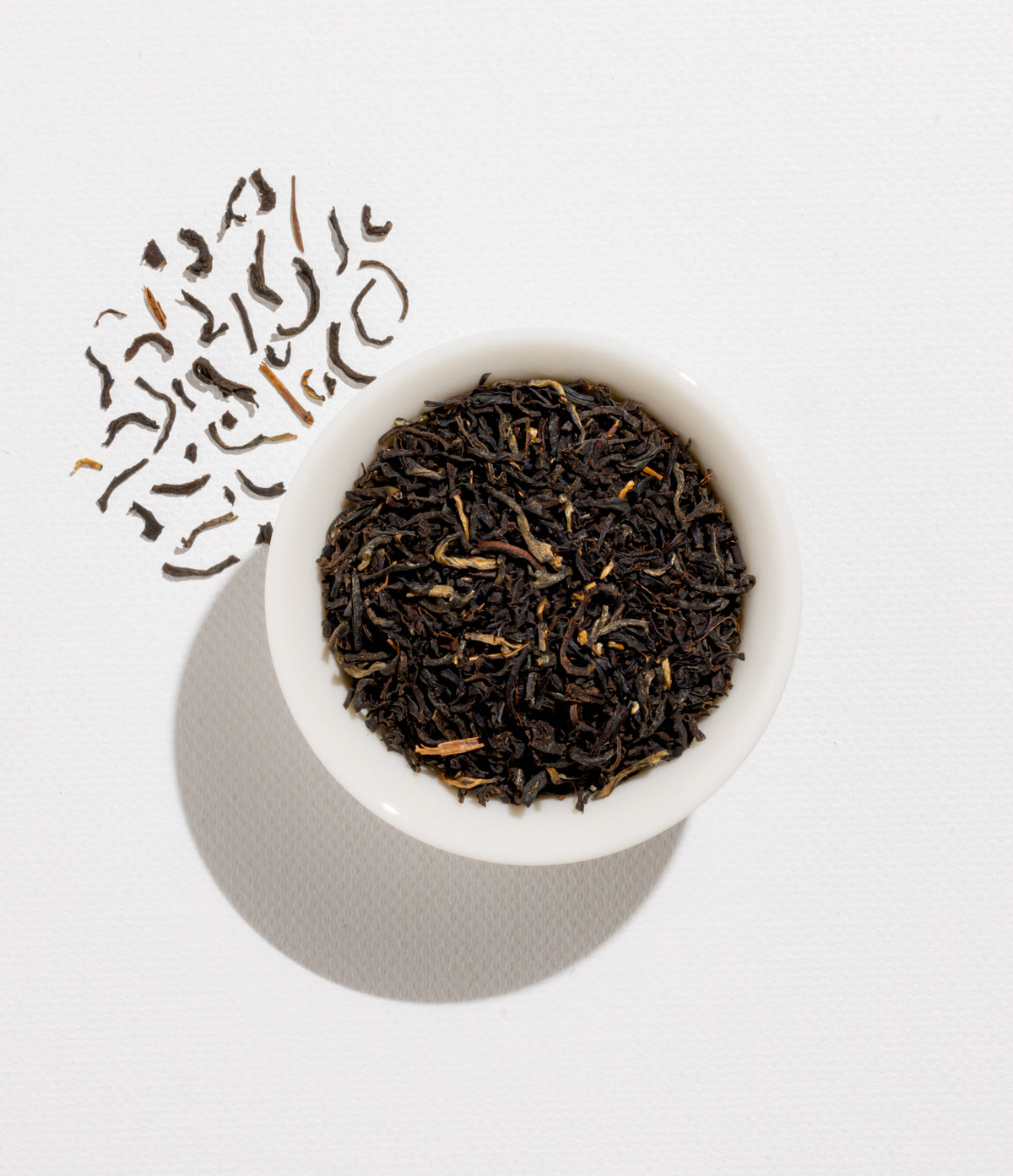
Orthodox Assam Tea: Processed by hand, Orthodox tea leaves are rolled to preserve their natural flavor and are often categorized by grades, such as Flowery Orange Pekoe (FOP) or Tippy Golden Flowery Orange Pekoe (TGFOP). This type of tea is more delicate, with golden buds and a complex flavor.
-
CTC Assam Tea: CTC, or Crush, Tear, Curl, is a machine-based method where tea leaves are crushed, torn, and curled into small pellets.This tea type produces a strong, dark brew and is generally more affordable. It’s ideal for making chai as its strength holds up well against milk and spices.
 |
| Black tea produced using the CTC method (Source: Wikipedia) |
Grades of Orthodox Assam Tea
Orthodox Assam teas are graded by leaf quality:
- Flowery Orange Pekoe (FOP): High-quality leaves with young buds.
- Orange Pekoe (OP): Fine-quality leaves without buds.
- Pekoe: Medium-quality leaves, still flavorful.
- Souchong: Large leaves, used for a milder brew.
How to Brew Assam Black Tea Perfectly
Brewing Assam Black Tea is simple but requires careful attention to water temperature and steeping time to achieve the ideal flavor.
-
Add Tea Leaves or Bag: Place one tablespoon of loose Assam tea leaves (or a tea bag) in a cup.
-
Heat Water: Boil water and let it cool to about 90°C (194°F).
-
Steep the Tea: Pour 230 ml of hot water over the tea leaves or tea bag. Steep for 3-5 minutes for a strong, dark brew. For a lighter taste, steep for only 2-3 minutes.
-
Optional Additions: While Assam tea is often enjoyed plain, you can add milk and sweeteners for a smoother, sweeter taste.
Tip: Filtered water enhances the natural flavors of Assam tea, so it’s recommended for the best brew.
>> Read more: How to Make Black Tea: The Ultimate Brewing Guide for Perfect Black Tea
 |
| Source: Unsplash |
Health Benefits Supported by Research
Assam Black Tea is known for its health benefits, which are largely due to its high antioxidant content and moderate caffeine levels.
Here’s a look at its main health benefits:
-
Increased Energy and Mental Alertness: With around 80 mg of caffeine per cup, Assam tea provides a natural energy boost, making it an ideal morning drink.
-
Rich in Antioxidants: Assam tea contains polyphenols, flavonoids, catechins, and tannins, all of which help reduce inflammation and support heart health. Studies published in the Journal of Agricultural and Food Chemistry highlight the role of these compounds in promoting cardiovascular health.
-
Supports Immune Health: The antioxidants in Assam tea can help bolster immunity, protecting against seasonal illnesses like colds and flu.
Health Tip: Drinking Assam tea without milk and sugar provides the maximum antioxidant benefits.
>> Read more: 10+ Proven Health Benefits of Black Tea: Heart Health, Antioxidants, and More(2024)
Assam Black Tea in the Global Market
The global demand for Assam Black Tea continues to grow as consumers around the world seek high-quality black teas.
As India’s leading export tea, Assam tea supports thousands of local farmers and contributes significantly to the Indian economy.
According to the International Tea Committee, Assam accounts for over 50% of India’s total tea production, making it a vital part of the global tea market.
Choosing the Best Assam Tea for Your Needs
How to Identify High-Quality Assam Tea
When choosing Assam Black Tea, look for:
- Golden Tips: The presence of golden buds (golden tips) indicates a higher quality tea with a sweeter flavor.
- Fresh Aroma: High-quality Assam tea should have a rich, malty aroma.
- Leaf Appearance: The leaves should be dark and well-rolled, indicating careful processing.
Best Brands and Where to Buy
Some popular brands that offer high-quality Assam Black Tea include Twinings, Vahdam, and Art of Tea.
These can be purchased online or at specialty tea shops. Buying directly from reputable sources ensures you get authentic Assam tea with all its rich flavors intact.
Save 12% sitewide at ArtofTea.com, coupon code: VENNGO. (Excluding Tea Club memberships).
Conclusion
Assam Black Tea is a unique and flavorful tea with a rich history and numerous health benefits.
Its malty, strong taste and adaptability make it suitable for various preparation styles, from pure black tea to a milk tea base for chai.
For tea enthusiasts, Assam Black Tea offers a memorable and invigorating experience that is both enjoyable and beneficial for health.
Its robust taste sets it apart from other black teas grown at higher altitudes.
FAQs about Assam Tea
Q1: Can I add milk to Assam Black Tea?
Yes, Assam Black Tea pairs well with milk and sugar, making it a popular choice for breakfast tea or Indian chai.
Adding milk softens its strong flavor, creating a balanced, creamy taste.
Q2: How much caffeine does Assam Black Tea have?
Assam Black Tea contains approximately 80 mg of caffeine per 230 ml cup, providing a gentle energy boost suitable for morning consumption.
Q3: Is Assam Black Tea good for health?
Yes, Assam Black Tea has numerous health benefits due to its antioxidants and moderate caffeine. It supports heart health, boosts immunity, and improves alertness.
Q4: What is the difference between Orthodox and CTC Assam Tea?
Orthodox Assam Tea is hand-processed, preserving delicate flavors and often containing golden tips.
CTC Assam Tea is machine-processed, producing a stronger, more affordable tea that’s ideal for chai.


